-
What happened?
An installation technician was ascending a stairway inside a tower.
As they reached the top of the stairway, they gripped the handrail with one hand and opened the stair gate with the other.
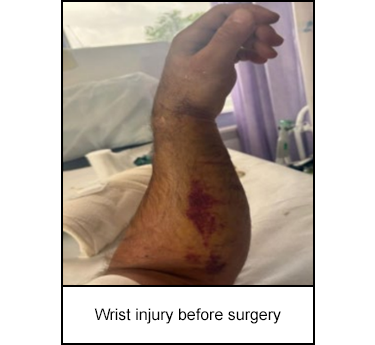
As they stepped through the gate, they tripped on the top step and fractured their wrist when they put their hand out to stop the fall.
The technician was not carrying anything at the time.
-
Why did it happen?
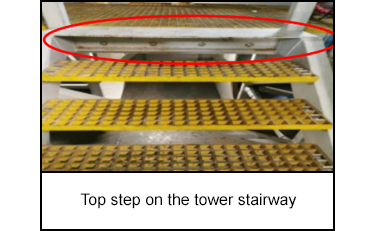
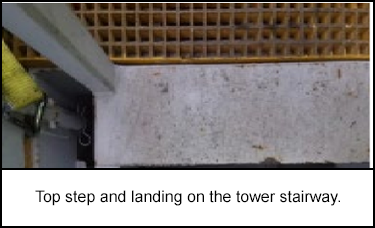
The top step on the stairway had not been painted correctly to highlight the hazard.
The steps were of non-uniform height, disrupting the natural gait of the user.
The height of the top step did not follow relevant standards for stairways and walkways.
-
What did they learn?
Anti-slip material should be applied to all top steps in the grillage to increase grip.
High-visibility paint should also be applied to increase visibility.
A review of stairway design and implementation, with a view to planning potential remedial work, is under way.
An investigation found that several technicians had mentioned the stairs as trip hazards. As they had not suffered injuries, they had not formally filed a report.
-
Ask yourself or your crew
Have we checked all stairs and landings for uneven steps or missing anti-slip features?
Do we report every trip or near miss, even if no one is hurt?
Do our work methods consider balance, grip, and visibility when moving or opening gates?
How do we make sure safety improvements remain in place and effective over time?

Add to homescreen
Content name
Select existing category:
Content name
New collection
Edit collection

What happened?
An installation technician was ascending a stairway inside a tower.
As they reached the top of the stairway, they gripped the handrail with one hand and opened the stair gate with the other.
As they stepped through the gate, they tripped on the top step and fractured their wrist when they put their hand out to stop the fall.
The technician was not carrying anything at the time.

Why did it happen?
The top step on the stairway had not been painted correctly to highlight the hazard.
The steps were of non-uniform height, disrupting the natural gait of the user.
The height of the top step did not follow relevant standards for stairways and walkways.

What did they learn?
Anti-slip material should be applied to all top steps in the grillage to increase grip.
High-visibility paint should also be applied to increase visibility.
A review of stairway design and implementation, with a view to planning potential remedial work, is under way.
An investigation found that several technicians had mentioned the stairs as trip hazards. As they had not suffered injuries, they had not formally filed a report.

Ask yourself or your crew
Have we checked all stairs and landings for uneven steps or missing anti-slip features?
Do we report every trip or near miss, even if no one is hurt?
Do our work methods consider balance, grip, and visibility when moving or opening gates?
How do we make sure safety improvements remain in place and effective over time?
An installation technician fractured their wrist after tripping on the top step of a tower stairway.