-
What happened?
A worker was carrying out routine maintenance on an excavator at a worksite.
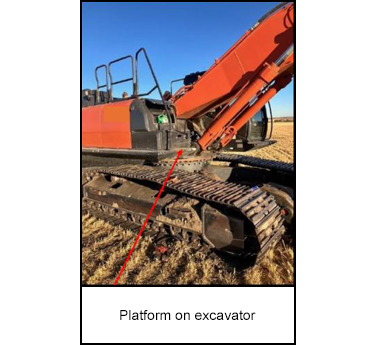
The worker was standing on a built-in equipment platform while completing the task.
The worker lost their balance and fell from the platform.
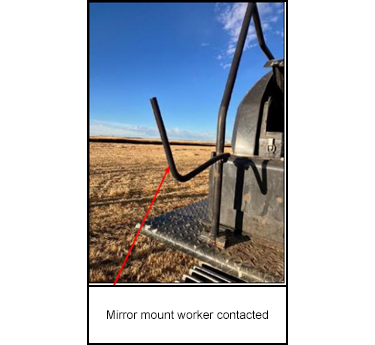
During the fall, the worker contacted the excavator mirror mounting bracket and then fell to the ground.
The incident resulted in a serious, life-altering abdominal injury.
-
Why did it happen?
The excavator used cameras instead of a conventional mirror.
The mirror had been removed because it was no longer needed and created a visual obstruction.
The mirror mounting bracket remained in place after the mirror was removed.
The bracket post was oriented upward at the edge of the built-in platform.
The worker contacted the upward-facing bracket during the fall.
-
What did they learn?
Assess equipment alterations, including apparently minor changes, for any new risks they could introduce.
Maintain ongoing awareness of equipment and surroundings as conditions change, rather than relying only on point-in-time task assessments.
Identify and address redundant components or conditions that no longer serve their original purpose.
Consider whether familiarity with equipment may allow a longstanding hazard to go unnoticed or unaddressed.
Involve frontline workers, including equipment operators, when assessing the effects of equipment changes.
-
Ask yourself or your crew
How could a similar fall or contact with a redundant component happen on our site?
What equipment or conditions in our operations are left over from something that is no longer in use?
How do we assess and manage the risks introduced when equipment is altered?
How are frontline workers and equipment operators involved when we assess the effects of a change?
How do we identify longstanding hazards that may have become familiar or routinely overlooked?

Add to homescreen
Content name
Select existing category:
Content name
New collection
Edit collection
What happened?
A worker was carrying out routine maintenance on an excavator at a worksite.
The worker was standing on a built-in equipment platform while completing the task.
The worker lost their balance and fell from the platform.
During the fall, the worker contacted the excavator mirror mounting bracket and then fell to the ground.
The incident resulted in a serious, life-altering abdominal injury.

Why did it happen?
The excavator used cameras instead of a conventional mirror.
The mirror had been removed because it was no longer needed and created a visual obstruction.
The mirror mounting bracket remained in place after the mirror was removed.
The bracket post was oriented upward at the edge of the built-in platform.
The worker contacted the upward-facing bracket during the fall.

What did they learn?
Assess equipment alterations, including apparently minor changes, for any new risks they could introduce.
Maintain ongoing awareness of equipment and surroundings as conditions change, rather than relying only on point-in-time task assessments.
Identify and address redundant components or conditions that no longer serve their original purpose.
Consider whether familiarity with equipment may allow a longstanding hazard to go unnoticed or unaddressed.
Involve frontline workers, including equipment operators, when assessing the effects of equipment changes.

Ask yourself or your crew
How could a similar fall or contact with a redundant component happen on our site?
What equipment or conditions in our operations are left over from something that is no longer in use?
How do we assess and manage the risks introduced when equipment is altered?
How are frontline workers and equipment operators involved when we assess the effects of a change?
How do we identify longstanding hazards that may have become familiar or routinely overlooked?
A worker suffered a life-altering injury after falling from an excavator platform onto an upward-facing mirror bracket.
Original material courtesy of Energy Safety Canada
The Energy Wheel https://www.energysafetycanada.com/resource/energy-wheel-program
The Scramble | Solving Problems with the 4Ds https://www.energysafetycanada.com/resource/solving-problems-4ds-program
SIF Prevention https://www.energysafetycanada.com/serious-injuries-and-fatalities-prevention