-
What happened?
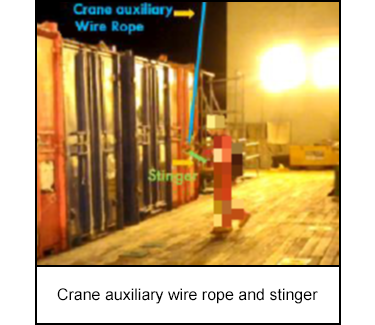
While supporting crane operations a worker holding the stinger of the crane’s wire assembly felt an electric charge.
-
Why did it happen?
At the time the event occurred, the facility was operating under Blue Alert status for lightning (lightning was detected 16Nm/30km (18.6 miles) from the facility, which allowed crane operations to continue.
Immediately following the event, the facility received notification of Red Alert status for lightning (lightning detected within 0km (0 miles) from the facility).
In the absence of direct lightning strikes at the time the event occurred, the investigation determined that the presence of intense electromagnetic conditions associated with the localised storm activity led to the development of a conductive pathway along the auxiliary wire rope / stinger.

-
What did they learn?
Lightning injury can occur without an individual being directly struck. Being in contact with conductive objects during periods of localised lightning activity can lead to injury.
The most effective control to ensure the workforce is protected from the risks of lightning is to ensure all personnel have stopped work and relocated to a ‘safe zone’ as per the local lightning phased controls. Personal protective equipment (PPE) is not an effective barrier to prevent injury due to the high voltage of lightning.
Adverse weather alerts and phased controls must be suitable for the work activity and location.

-
Ask yourself or your crew
What are the Lightning Alert phases for your workplace? What activities are permitted under each of these phases?
How does your workplace receive adverse weather notifications? How are they communicated to the workforce?
Do you and your workmates regularly discuss safety practices and procedures regarding lightning strike prevention? Discuss it now.

Add to homescreen
Content name
Select existing category:
Content name
New collection
Edit collection

What happened?
While supporting crane operations a worker holding the stinger of the crane’s wire assembly felt an electric charge.

Why did it happen?
At the time the event occurred, the facility was operating under Blue Alert status for lightning (lightning was detected 16Nm/30km (18.6 miles) from the facility, which allowed crane operations to continue.
Immediately following the event, the facility received notification of Red Alert status for lightning (lightning detected within 0km (0 miles) from the facility).
In the absence of direct lightning strikes at the time the event occurred, the investigation determined that the presence of intense electromagnetic conditions associated with the localised storm activity led to the development of a conductive pathway along the auxiliary wire rope / stinger.

What did they learn?
Lightning injury can occur without an individual being directly struck. Being in contact with conductive objects during periods of localised lightning activity can lead to injury.
The most effective control to ensure the workforce is protected from the risks of lightning is to ensure all personnel have stopped work and relocated to a ‘safe zone’ as per the local lightning phased controls. Personal protective equipment (PPE) is not an effective barrier to prevent injury due to the high voltage of lightning.
Adverse weather alerts and phased controls must be suitable for the work activity and location.

Ask yourself or your crew
What are the Lightning Alert phases for your workplace? What activities are permitted under each of these phases?
How does your workplace receive adverse weather notifications? How are they communicated to the workforce?
Do you and your workmates regularly discuss safety practices and procedures regarding lightning strike prevention? Discuss it now.
While supporting crane operations a worker holding the stinger of the crane’s wire assembly felt an electric charge.
Original material courtesy of Safer Together (Australia)
To access the PDF and PowerPoint versions, please visit: https://www.safertogether.com.au/learning-event-bulletins/worker-affected-by-lightning-leb-toolbox