-
What happened?
During commissioning activities at a wind turbine generator (WTG) site, a load rejection test was conducted while all personnel were returning to port.
The test involved remotely opening and closing a circuit breaker, initially producing approximately 2 MW according to the procedure.
Immediately after closing the circuit breaker, the entire wind farm and the shore circuit breaker tripped, and smoke detectors in a WTG foundation were activated.
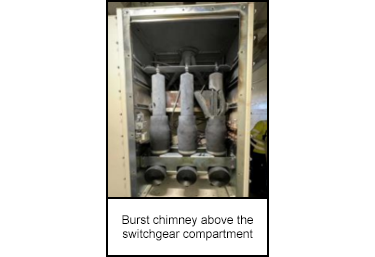
Subsequent inspection revealed a burst chimney above the switchgear compartment and an exploded surge arrester on phase L3.
-
Why did it happen?
Potential gradual degradation of the phase L3 surge arrester due to prior overvoltage events and a possible overload from a fault in the associated circuit breaker.
Insufficient monitoring and data analysis from SCADA (supervisory control and data acquisition) and previous tests, which could have provided early warning of the issue.
Unprecedented nature of the event (the first of its kind on site) contributed to the lack of prior detection or preventive measures.

-
What did they learn?
An investigation was conducted to identify the root cause, and replace faulty switchgear as required, followed by commissioning and validation of safe operation.
Defective equipment was returned to the supplier for final root cause analysis.
Implemented a strict risk assessment and permit-to-work procedures for all electrical tests and remote switching operations, ensuring offshore personnel are in safe locations.
Teams must maintain appropriate fire detection and suppression systems near high-risk electrical equipment, and utilise SCADA for early detection and improved remote monitoring.
Enhance data availability, remote control capabilities, and ensure personnel and manufacturer teams have proper training and electrical accreditation for safe offshore intervention.

-
Ask yourself or your crew
How can we better use SCADA and data to detect issues early?
What extra risk assessments or permits should we apply for electrical tests?
How can we ensure offshore personnel stay safe during high-risk operations?
Are fire detection and suppression systems sufficient near critical equipment?
How can we improve training and readiness for safe offshore electrical interventions?

Add to homescreen
Content name
Select existing category:
Content name
New collection
Edit collection

What happened?
During commissioning activities at a wind turbine generator (WTG) site, a load rejection test was conducted while all personnel were returning to port.
The test involved remotely opening and closing a circuit breaker, initially producing approximately 2 MW according to the procedure.
Immediately after closing the circuit breaker, the entire wind farm and the shore circuit breaker tripped, and smoke detectors in a WTG foundation were activated.
Subsequent inspection revealed a burst chimney above the switchgear compartment and an exploded surge arrester on phase L3.

Why did it happen?
Potential gradual degradation of the phase L3 surge arrester due to prior overvoltage events and a possible overload from a fault in the associated circuit breaker.
Insufficient monitoring and data analysis from SCADA (supervisory control and data acquisition) and previous tests, which could have provided early warning of the issue.
Unprecedented nature of the event (the first of its kind on site) contributed to the lack of prior detection or preventive measures.

What did they learn?
An investigation was conducted to identify the root cause, and replace faulty switchgear as required, followed by commissioning and validation of safe operation.
Defective equipment was returned to the supplier for final root cause analysis.
Implemented a strict risk assessment and permit-to-work procedures for all electrical tests and remote switching operations, ensuring offshore personnel are in safe locations.
Teams must maintain appropriate fire detection and suppression systems near high-risk electrical equipment, and utilise SCADA for early detection and improved remote monitoring.
Enhance data availability, remote control capabilities, and ensure personnel and manufacturer teams have proper training and electrical accreditation for safe offshore intervention.

Ask yourself or your crew
How can we better use SCADA and data to detect issues early?
What extra risk assessments or permits should we apply for electrical tests?
How can we ensure offshore personnel stay safe during high-risk operations?
Are fire detection and suppression systems sufficient near critical equipment?
How can we improve training and readiness for safe offshore electrical interventions?
Electrical equipment failed during a wind farm load rejection test, causing smoke alarm activation and breaker trips.