-
What happened?
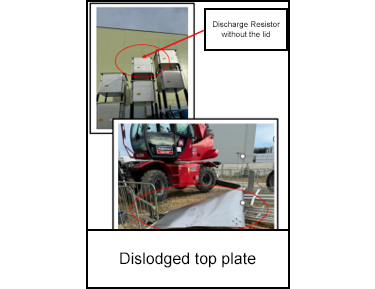
During high winds, a top plate on a pre-installed discharge resistor detached.
The piece, measuring 2.5 x 2 metres (8 x 6.5 feet) fell around 7 metres (23 feet) to the ground.
Working below was a technician, who was struck in the leg by the falling piece.
The technician was taken to hospital and found to have considerable swelling and bruising around the area of impact.
-
Why did it happen?
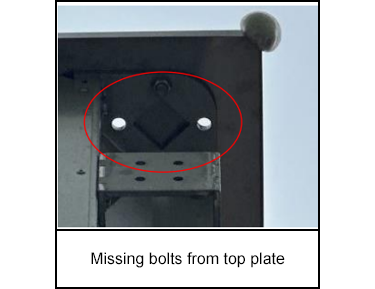
It was found that the top plate had not been properly secured to the resistor and was missing three of the four securing bolts.
The installation instructions for the top plate did not mention explicitly that the bolts were needed to fully secure the top.
The housing unit had been installed several weeks before the incident, however no set process was in place to complete installation checks immediately after installation.
-
What did they learn?
Subsequent inspections of similar resistor housing units at other high voltage direct current (HVDC) sites managed by the Principal Contractor (PC) revealed that the lids on those units had also been installed without the correct securing bolts.
A wind tunnel effect occurred when the wind blew in a certain direction. While wind speeds were within working limits, this wind tunnel effect made the top piece more susceptible to being displaced by the wind.

-
Ask yourself or your crew
Is the weather acceptable for work to take place?
What checks have been carried out on any newly installed units?
Is a technician in the line of fire of any potential future hazards?
Has a risk assessment been correctly carried out for the work area?

Add to homescreen
Content name
Select existing category:
Content name
New collection
Edit collection

What happened?
During high winds, a top plate on a pre-installed discharge resistor detached.
The piece, measuring 2.5 x 2 metres (8 x 6.5 feet) fell around 7 metres (23 feet) to the ground.
Working below was a technician, who was struck in the leg by the falling piece.
The technician was taken to hospital and found to have considerable swelling and bruising around the area of impact.

Why did it happen?
It was found that the top plate had not been properly secured to the resistor and was missing three of the four securing bolts.
The installation instructions for the top plate did not mention explicitly that the bolts were needed to fully secure the top.
The housing unit had been installed several weeks before the incident, however no set process was in place to complete installation checks immediately after installation.

What did they learn?
Subsequent inspections of similar resistor housing units at other high voltage direct current (HVDC) sites managed by the Principal Contractor (PC) revealed that the lids on those units had also been installed without the correct securing bolts.
A wind tunnel effect occurred when the wind blew in a certain direction. While wind speeds were within working limits, this wind tunnel effect made the top piece more susceptible to being displaced by the wind.

Ask yourself or your crew
Is the weather acceptable for work to take place?
What checks have been carried out on any newly installed units?
Is a technician in the line of fire of any potential future hazards?
Has a risk assessment been correctly carried out for the work area?
A top plate detached in high winds, fell 7 metres (23ft), and struck a technician’s leg, causing significant swelling and bruising.