-
What happened?
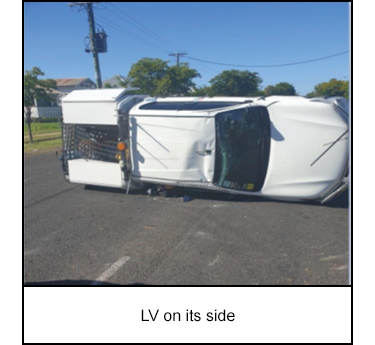
A light vehicle (LV) travelling below the 40km/h (24.9 mph) speed limit in a regional town was struck by a third-party LV that failed to give way at an intersection. The side impact caused the LV to tip onto its side.
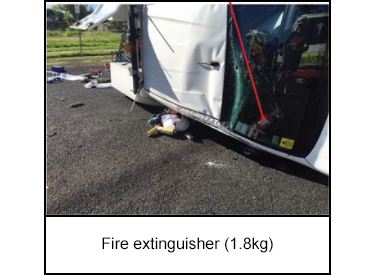
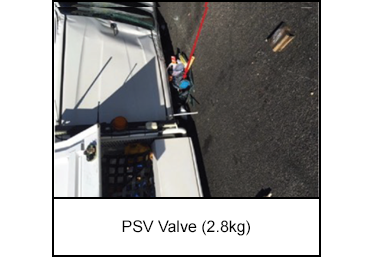
Unsecured items inside the vehicle cabin (1.8 kg (4 lb) fire extinguisher; 2.8 kg (6.2 lb) pressure safety valve (PSV)) posed a line of fire risk during the incident.
Emergency responders were activated by the vehicle duress alert. No injuries were sustained.
-
Why did it happen?
The third-party vehicle failed to give way at an intersection.
-
What did they learn?
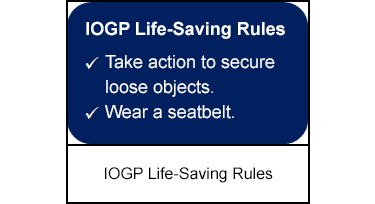
Take the time before commencing any journey to secure loose objects or find alternate means of transport if they cannot be safely secured.
Regularly review available data (e.g. in-vehicle monitoring system (IVMS) violations, incident data) to identify hot spots. Communicate known hot spots to drivers and journey planners.
Ensure journey management processes involve work planning to minimise vehicle kilometres travelled (VKT).
-
Ask yourself or your crew
What checks do you conduct prior to starting a journey? Do you check that all loose objects in the cabin are secured?
Do you have a fire extinguisher in your vehicle? Is it secured?
Are there any driving incident hot spots where you drive? How do you find out about them? Does your journey plan avoid them?
Add to homescreen
Content name
Select existing category:
Content name
New collection
Edit collection

What happened?
A light vehicle (LV) travelling below the 40km/h (24.9 mph) speed limit in a regional town was struck by a third-party LV that failed to give way at an intersection. The side impact caused the LV to tip onto its side.
Unsecured items inside the vehicle cabin (1.8 kg (4 lb) fire extinguisher; 2.8 kg (6.2 lb) pressure safety valve (PSV)) posed a line of fire risk during the incident.
Emergency responders were activated by the vehicle duress alert. No injuries were sustained.

Why did it happen?
The third-party vehicle failed to give way at an intersection.

What did they learn?
Take the time before commencing any journey to secure loose objects or find alternate means of transport if they cannot be safely secured.
Regularly review available data (e.g. in-vehicle monitoring system (IVMS) violations, incident data) to identify hot spots. Communicate known hot spots to drivers and journey planners.
Ensure journey management processes involve work planning to minimise vehicle kilometres travelled (VKT).

Ask yourself or your crew
What checks do you conduct prior to starting a journey? Do you check that all loose objects in the cabin are secured?
Do you have a fire extinguisher in your vehicle? Is it secured?
Are there any driving incident hot spots where you drive? How do you find out about them? Does your journey plan avoid them?
A light vehicle was struck at an intersection, rolled onto its side, and unsecured cabin items created additional hazards.
Original material courtesy of Safer Together (Australia)
To access the PDF and PowerPoint versions, please visit https://www.safertogether.com.au/learning-event-bulletins/driving-collision