-
What happened?
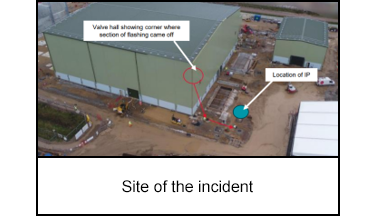
Late on a Friday, a contractor had attached flashing to a building temporarily, with the intent to come back on Monday to attach it properly.
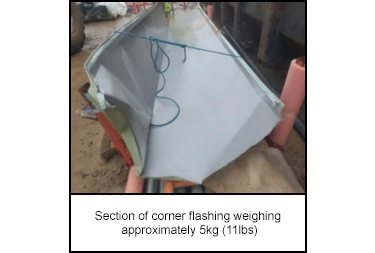
This section of flashing was blown from the building on Monday during high winds.
The flashing fell 14 metres (46 feet) and blew across the yard, making contact with a technician in the area.
The injured person (IP) did not initially report the incident, but was checked over for bruising after they alerted medical professionals.
-
Why did it happen?
The flashing had been attached incorrectly, with the technician hoping to come back and correctly attach it after the weekend.
The contractor had not informed anyone else at the site that the flashing had only been temporarily attached.

-
What did they learn?
The contractor’s supervisor was not on site when the temporary fix was done and was not informed that it had been done.
There were no standards or specifications pertaining to how many fasteners should be used with the flashing contained in the job paperwork, although the flashing is pre-drilled.
Site-specific adverse weather management plans have been produced to identify named individuals who have authority to stand works down.
-
Ask yourself or your crew
How do we ensure temporary fixes are clearly communicated and understood by all personnel on site?
Will a temporary fix be sufficient for a task if there are unforeseen circumstances such as weather changes, staffing changes etc?
Are technicians aware of other jobs going on on-site that may affect their work?
How can coordination between teams be strengthened to identify hazards introduced by short-term solutions?

Add to homescreen
Content name
Select existing category:
Content name
New collection
Edit collection

What happened?
Late on a Friday, a contractor had attached flashing to a building temporarily, with the intent to come back on Monday to attach it properly.
This section of flashing was blown from the building on Monday during high winds.
The flashing fell 14 metres (46 feet) and blew across the yard, making contact with a technician in the area.
The injured person (IP) did not initially report the incident, but was checked over for bruising after they alerted medical professionals.

Why did it happen?
The flashing had been attached incorrectly, with the technician hoping to come back and correctly attach it after the weekend.
The contractor had not informed anyone else at the site that the flashing had only been temporarily attached.

What did they learn?
The contractor’s supervisor was not on site when the temporary fix was done and was not informed that it had been done.
There were no standards or specifications pertaining to how many fasteners should be used with the flashing contained in the job paperwork, although the flashing is pre-drilled.
Site-specific adverse weather management plans have been produced to identify named individuals who have authority to stand works down.

Ask yourself or your crew
How do we ensure temporary fixes are clearly communicated and understood by all personnel on site?
Will a temporary fix be sufficient for a task if there are unforeseen circumstances such as weather changes, staffing changes etc?
Are technicians aware of other jobs going on on-site that may affect their work?
How can coordination between teams be strengthened to identify hazards introduced by short-term solutions?
A contractor left flashing temporarily secured; high winds dislodged it, and it fell 14 metres (46 feet), striking a technician and causing minor injury.