-
What happened?
The crew was in the process of unseating the downhole pump on a service rig. To do this, the crew was cleared from the floor and remained at a safe distance. The driller was on the rig floor at the driller’s pad, attempting to unseat the pump using fiberglass rods.
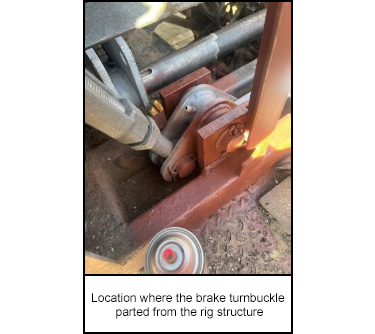
While the driller was working the rod string up and down, the blocks suddenly stopped. The brake handle collapsed when the turnbuckle failed, causing the driller to fall to their knees. The driller observed the blocks coming down and the drill line back-spooling in the drawworks. Recognising the hazard, the driller exited the driller’s pad via the front rig stairs. The drill line tripped the crown saver, which activated the disc brake and stopped the drum. However, the drill line continued to fall, landing on the rig floor.
-
Why did it happen?
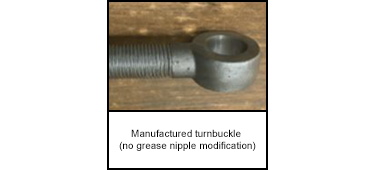
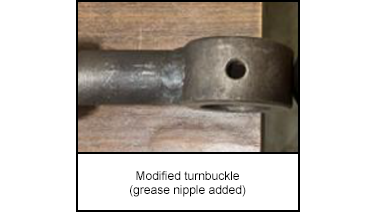
The investigation found that the turnbuckle had been modified by a Level IV third-party manufacturing/refurbishing company. A grease nipple had been installed on the turnbuckle, which weakened the component and led to the breakage that occurred.
-
What did they learn?
Clean all brake linkage components to allow for more thorough visual inspection.
Implement annual Magnaflux inspections of brake linkage components.
Verify brake linkage design and configuration across all rigs to identify and remove components with grease nipple modifications, if present.
-
Ask yourself or your crew
How could this happen to you?
How is management of change handled by you and your third-party service providers?
Are components engineered for the loads that will be experienced and how would you know?
Add to homescreen
Content name
Select existing category:
Content name
New collection
Edit collection

What happened?
The crew was in the process of unseating the downhole pump on a service rig. To do this, the crew was cleared from the floor and remained at a safe distance. The driller was on the rig floor at the driller’s pad, attempting to unseat the pump using fiberglass rods.
While the driller was working the rod string up and down, the blocks suddenly stopped. The brake handle collapsed when the turnbuckle failed, causing the driller to fall to their knees. The driller observed the blocks coming down and the drill line back-spooling in the drawworks. Recognising the hazard, the driller exited the driller’s pad via the front rig stairs. The drill line tripped the crown saver, which activated the disc brake and stopped the drum. However, the drill line continued to fall, landing on the rig floor.

Why did it happen?
The investigation found that the turnbuckle had been modified by a Level IV third-party manufacturing/refurbishing company. A grease nipple had been installed on the turnbuckle, which weakened the component and led to the breakage that occurred.

What did they learn?
Clean all brake linkage components to allow for more thorough visual inspection.
Implement annual Magnaflux inspections of brake linkage components.
Verify brake linkage design and configuration across all rigs to identify and remove components with grease nipple modifications, if present.

Ask yourself or your crew
How could this happen to you?
How is management of change handled by you and your third-party service providers?
Are components engineered for the loads that will be experienced and how would you know?
A modified turnbuckle failed on a service rig, collapsing the brake handle and causing an uncontrolled drill line fall before the crown saver stopped the drum.
Original material courtesy of Energy Safety Canada