-
What happened?
A floating transponder was being deployed over the aft side of a vessel using a polypropylene rope.
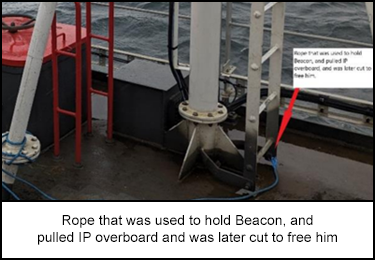
While retrieving the transponder, the rope became entangled in a thruster.
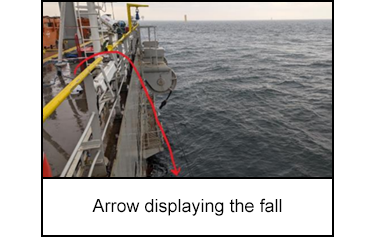
The rope rapidly tightened, and a worker standing in the bite of the rope was pulled over the railing.
The individual was left suspended over the waterline, creating a high-risk situation.
The worker was retrieved safely and was not injured, but the incident had the potential for serious harm or fatality.
At the time of the incident, the individual was working alone and without direct supervision.
-
Why did it happen?
Training for non-marine personnel boarding vessels was inadequate, particularly regarding hazard awareness and rope handling.
The individual was working alone, which increased the risk and reduced the chance of early intervention.
Communication between departments and the bridge was insufficient for safe operations.
Hazard identification risk assessments were not effectively conducted or communicated.
There were no clear, enforced procedures or safe work practices for deploying and retrieving equipment overboard.
Risk management tools, although available, were not consistently implemented across all departments onboard.
-
What did they learn?
There is a need for specific guidelines and proper equipment (e.g., davit cranes) to reduce manual handling risks when deploying gear overboard.
Training for non-marine personnel must be strengthened to include marine hazard awareness and emergency protocols.
Risk management systems and safe work practices need to be more accessible, standardised, and consistently used across all departments.
Communication strategies must be improved to ensure all relevant teams are aware of ongoing activities and associated risks.
Working alone, especially at night, must be evaluated more critically and avoided where possible.
Future procedures should include technical solutions for small equipment deployment to eliminate manual rope handling.

-
Ask yourself or your crew
Are all personnel, especially non-marine staff, adequately trained in vessel-specific risks and safety procedures?
How can we eliminate or reduce the need for manual handling during overboard operations?
Are risk assessments and hazard identification tools actively used and understood by all departments?
What checks are in place to prevent personnel from working alone in high-risk environments?
How do we ensure effective communication across all levels before and during marine operations?

Add to homescreen
Content name
Select existing category:
Content name
New collection
Edit collection

What happened?
A floating transponder was being deployed over the aft side of a vessel using a polypropylene rope.
While retrieving the transponder, the rope became entangled in a thruster.
The rope rapidly tightened, and a worker standing in the bite of the rope was pulled over the railing.
The individual was left suspended over the waterline, creating a high-risk situation.
The worker was retrieved safely and was not injured, but the incident had the potential for serious harm or fatality.
At the time of the incident, the individual was working alone and without direct supervision.

Why did it happen?
Training for non-marine personnel boarding vessels was inadequate, particularly regarding hazard awareness and rope handling.
The individual was working alone, which increased the risk and reduced the chance of early intervention.
Communication between departments and the bridge was insufficient for safe operations.
Hazard identification risk assessments were not effectively conducted or communicated.
There were no clear, enforced procedures or safe work practices for deploying and retrieving equipment overboard.
Risk management tools, although available, were not consistently implemented across all departments onboard.

What did they learn?
There is a need for specific guidelines and proper equipment (e.g., davit cranes) to reduce manual handling risks when deploying gear overboard.
Training for non-marine personnel must be strengthened to include marine hazard awareness and emergency protocols.
Risk management systems and safe work practices need to be more accessible, standardised, and consistently used across all departments.
Communication strategies must be improved to ensure all relevant teams are aware of ongoing activities and associated risks.
Working alone, especially at night, must be evaluated more critically and avoided where possible.
Future procedures should include technical solutions for small equipment deployment to eliminate manual rope handling.

Ask yourself or your crew
Are all personnel, especially non-marine staff, adequately trained in vessel-specific risks and safety procedures?
How can we eliminate or reduce the need for manual handling during overboard operations?
Are risk assessments and hazard identification tools actively used and understood by all departments?
What checks are in place to prevent personnel from working alone in high-risk environments?
How do we ensure effective communication across all levels before and during marine operations?
While retrieving a transponder, a rope snagged in a thruster and pulled a worker overboard. They were rescued unharmed, but the risk was severe.