-
What happened?
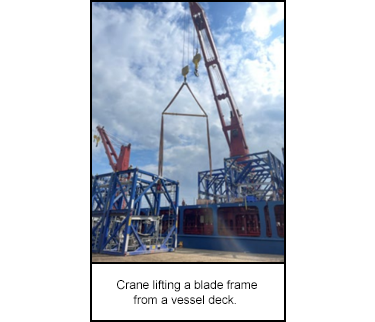
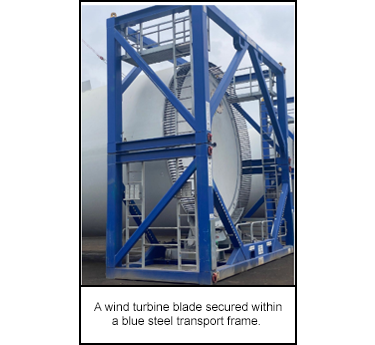
During reverse logistics operations, two riggers were attaching a blade to a vessel’s crane for transport.
Both riggers had finished attaching their crane shackles to the blade frames, but only one rigger had moved away from their blade frame.
The crane operator initiated the lift without realising one rigger was still attached.
Workers immediately shouted to stop the lift, and an All Stop was initiated.
All lifting operations were suspended, and an investigation was launched.
-
Why did it happen?
No “green-light” signal was issued before lifting, so the operator lifted without confirmation from a designated banksman or the rest of the lifting team.
Roles and communication were unclear, with no defined lift methodology, no crew handover and inconsistent signals between teams.
No joint pre-task briefing was held to align vessel and onshore teams on roles or communication protocols.
There was no formal step to verify personnel were clear before initiating the lift.
-
What did they learn?
A joint pre-task brief must be held before each offload to confirm roles, the lift method and communication signals.
A standardised prompt sheet should be developed and completed at each vessel operation for consistent communication and coordination.
Walk-through familiarisation by the onshore operations logistics manager should be conducted before future logistics work to verify correct lifting procedures.
Permit-to-work systems and risk assessments and method statements (RAMS) should be updated to include hold points for pre-task briefings and lift authorisation.

-
Ask yourself or your crew
Have all team members clearly understood their roles, responsibilities, and communication methods before the lift begins?
Is there a confirmed “all clear” or “green-light” signal process in place before any lifting operation starts?
Have we held a joint pre-task briefing involving both vessel and onshore teams to review the lift plan and safety controls?
Are supervision and communication tools, including radios, hand signals and checklists properly tested and aligned across all parties?
What factors may have led the crane operator to believe the lift could begin before everyone was clear of the load?

Add to homescreen
Content name
Select existing category:
Content name
New collection
Edit collection

What happened?
During reverse logistics operations, two riggers were attaching a blade to a vessel’s crane for transport.
Both riggers had finished attaching their crane shackles to the blade frames, but only one rigger had moved away from their blade frame.
The crane operator initiated the lift without realising one rigger was still attached.
Workers immediately shouted to stop the lift, and an All Stop was initiated.
All lifting operations were suspended, and an investigation was launched.

Why did it happen?
No “green-light” signal was issued before lifting, so the operator lifted without confirmation from a designated banksman or the rest of the lifting team.
Roles and communication were unclear, with no defined lift methodology, no crew handover and inconsistent signals between teams.
No joint pre-task briefing was held to align vessel and onshore teams on roles or communication protocols.
There was no formal step to verify personnel were clear before initiating the lift.

What did they learn?
A joint pre-task brief must be held before each offload to confirm roles, the lift method and communication signals.
A standardised prompt sheet should be developed and completed at each vessel operation for consistent communication and coordination.
Walk-through familiarisation by the onshore operations logistics manager should be conducted before future logistics work to verify correct lifting procedures.
Permit-to-work systems and risk assessments and method statements (RAMS) should be updated to include hold points for pre-task briefings and lift authorisation.

Ask yourself or your crew
Have all team members clearly understood their roles, responsibilities, and communication methods before the lift begins?
Is there a confirmed “all clear” or “green-light” signal process in place before any lifting operation starts?
Have we held a joint pre-task briefing involving both vessel and onshore teams to review the lift plan and safety controls?
Are supervision and communication tools, including radios, hand signals and checklists properly tested and aligned across all parties?
What factors may have led the crane operator to believe the lift could begin before everyone was clear of the load?
A crane lift began while a rigger was still attached to a blade frame, prompting an All Stop and suspension of lifting operations.