-
What happened?
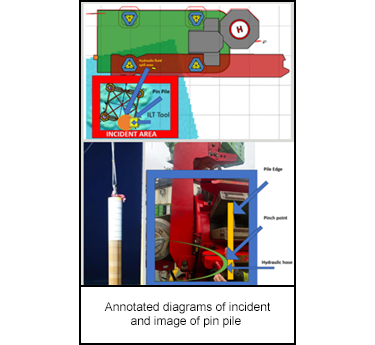
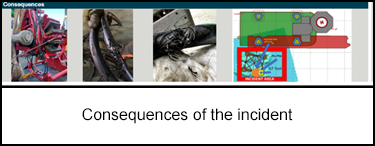
During offshore lifting operations, a hydraulic hose attached to a lifting tool was punctured.
An Internal lifting tool (ILT) was being recovered by a crane operator, when it suddenly dropped onto a pile and punctured the hydraulic hose.
This resulted in a spill of biodegradable hydraulic fluid onto the equipment, deck and into the sea.
The incident occurred at night, and the dropped load was not immediately detected.
-
Why did it happen?
The hydraulic system had design flaws that made hose management difficult.
The hose was an addon, not an original part, so hose securing methods were insufficient, relying on zip ties that failed.
A crane operator who lacked experience with hydraulic lifting mechanisms, took over during night operations.
Because of the lack of training and low light, the crane operator was not able to properly evaluate the sling tension in the shackle.

-
What did they learn?
Equipment design should include hose protection and emergency shutoff features.
Quick couplings must be accessible to allow safe disconnection at the power unit.
Operator competence must be verified through training and experience checks.
Night shift visibility should be addressed in hazard identification processes.
Hose inspection regimes must be part of vessel maintenance programs and should happen both as a general check and as an emergency check.
-
Ask yourself or your crew
Are our hydraulic systems designed to prevent hose damage during operations?
How do we ensure hoses are properly secured and inspected?
What training do we provide for crane and hydraulic system operators?
How do we manage visibility and awareness during night operations?
What improvements can we make to prevent environmental spills?

Add to homescreen
Content name
Select existing category:
Content name
New collection
Edit collection

What happened?
During offshore lifting operations, a hydraulic hose attached to a lifting tool was punctured.
An Internal lifting tool (ILT) was being recovered by a crane operator, when it suddenly dropped onto a pile and punctured the hydraulic hose.
This resulted in a spill of biodegradable hydraulic fluid onto the equipment, deck and into the sea.
The incident occurred at night, and the dropped load was not immediately detected.

Why did it happen?
The hydraulic system had design flaws that made hose management difficult.
The hose was an addon, not an original part, so hose securing methods were insufficient, relying on zip ties that failed.
A crane operator who lacked experience with hydraulic lifting mechanisms, took over during night operations.
Because of the lack of training and low light, the crane operator was not able to properly evaluate the sling tension in the shackle.

What did they learn?
Equipment design should include hose protection and emergency shutoff features.
Quick couplings must be accessible to allow safe disconnection at the power unit.
Operator competence must be verified through training and experience checks.
Night shift visibility should be addressed in hazard identification processes.
Hose inspection regimes must be part of vessel maintenance programs and should happen both as a general check and as an emergency check.

Ask yourself or your crew
Are our hydraulic systems designed to prevent hose damage during operations?
How do we ensure hoses are properly secured and inspected?
What training do we provide for crane and hydraulic system operators?
How do we manage visibility and awareness during night operations?
What improvements can we make to prevent environmental spills?
During offshore lifting, an ILT dropped on a pile, puncturing a hydraulic hose and spilling fluid into the sea. The incident went unnoticed at night.