-
What happened?
An operator was monitoring the movement of a gangway during a gangway movement operations test.
This was done via remote control, with the operator standing in front of the gangway.
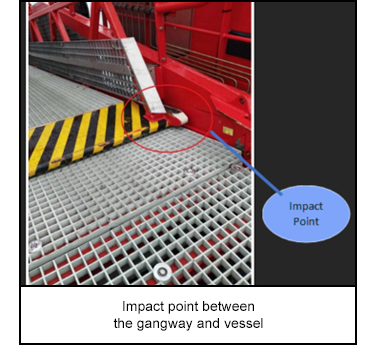
Due to a sudden swelling of the sea, the vessel moved, causing the operator to take a step forward to get their balance. This resulted in their foot being next to the edge of the gangway.
At the same time, the gangway moved towards the vessel and struck the operators ankle causing a small injury.
-
Why did it happen?
Sudden changes in the forecast of the sea swell caused the operator to lose balance in a way that put them in the path of the moving gangway.
The operator was too focused on operating the gangway so didn’t think about their placement relative to it.

-
What did they learn?
All walk-to-work systems need to be risk assessed and have control measures in place for crushing.
They must work with the walkway manufacturer to install additional barriers and guard rails on all gangways, ensuring that only authorised personnel can access operational gangways and preventing further injuries.
A temporary chain barrier should be in place to avoid operators walking unintentionally towards the main bridge during deployment and retrieval of the bridge.
The last person on the gangway either walking towards the platform or vessel must close the chain to prevent technicians from walking on the bridge during unforeseen swelling.
-
Ask yourself or your crew
Are you positioned correctly for this task, including away from hazards that may be currently unseen?
How effective are temporary control measures in minimising this type of incident happening again?
How can we improve safety on walk to work devices such as this?
Has the sea and the environment been monitored for enough time to make sure there are no unforeseen changes?
Add to homescreen
Content name
Select existing category:
Content name
New collection
Edit collection

What happened?
An operator was monitoring the movement of a gangway during a gangway movement operations test.
This was done via remote control, with the operator standing in front of the gangway.
Due to a sudden swelling of the sea, the vessel moved, causing the operator to take a step forward to get their balance. This resulted in their foot being next to the edge of the gangway.
At the same time, the gangway moved towards the vessel and struck the operators ankle causing a small injury.

Why did it happen?
Sudden changes in the forecast of the sea swell caused the operator to lose balance in a way that put them in the path of the moving gangway.
The operator was too focused on operating the gangway so didn’t think about their placement relative to it.

What did they learn?
All walk-to-work systems need to be risk assessed and have control measures in place for crushing.
They must work with the walkway manufacturer to install additional barriers and guard rails on all gangways, ensuring that only authorised personnel can access operational gangways and preventing further injuries.
A temporary chain barrier should be in place to avoid operators walking unintentionally towards the main bridge during deployment and retrieval of the bridge.
The last person on the gangway either walking towards the platform or vessel must close the chain to prevent technicians from walking on the bridge during unforeseen swelling.

Ask yourself or your crew
Are you positioned correctly for this task, including away from hazards that may be currently unseen?
How effective are temporary control measures in minimising this type of incident happening again?
How can we improve safety on walk to work devices such as this?
Has the sea and the environment been monitored for enough time to make sure there are no unforeseen changes?
An operator suffered a minor ankle injury when a gangway moved unexpectedly during a remote-controlled movement test.