-
What happened?
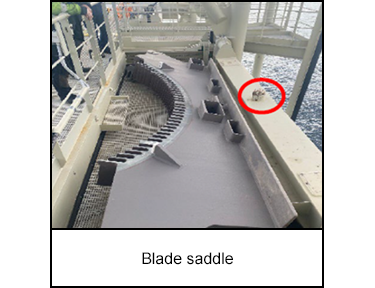
During backloading operations on an offshore vessel, technicians prepared to lift blade saddles used for turbine blade transport.
While waiting for the crane, a safety pin was removed from one saddle without considering the incline it was resting on.
The saddle shifted and tipped over, landing where technicians had been standing only moments earlier.
No injuries occurred, and the saddle was later lifted and inspected for damage.
-
Why did it happen?
The task sequence outlined in the work instruction was not followed.
The new blade rack design allowed for a steeper incline than expected, increasing the tipping risk.
Ship movement changed the tilt angle beyond design limits, and rubber stoppers were unsuitable to prevent movement at that angle.
The safety pin was removed before the saddle was secured to the crane hook.
-
What did they learn?
Teams should strictly follow the approved work instructions in the correct sequence.
Supervisors should reinforce safety procedures, especially securing components before lifting.
Work instructions should clearly highlight pin placement and crane hook connection.
Crews should actively assess how equipment design changes affect operational safety.
-
Ask yourself or your crew
How do you ensure that you and your team always follow the correct sequence during lifting operations?
How should design changes be assessed before operational use?
How can we verify that securing mechanisms are adequate for varying conditions such as vessel movement?
What safeguards should be in place before safety components are removed?

Add to homescreen
Content name
Select existing category:
Content name
New collection
Edit collection
What happened?
During backloading operations on an offshore vessel, technicians prepared to lift blade saddles used for turbine blade transport.
While waiting for the crane, a safety pin was removed from one saddle without considering the incline it was resting on.
The saddle shifted and tipped over, landing where technicians had been standing only moments earlier.
No injuries occurred, and the saddle was later lifted and inspected for damage.

Why did it happen?
The task sequence outlined in the work instruction was not followed.
The new blade rack design allowed for a steeper incline than expected, increasing the tipping risk.
Ship movement changed the tilt angle beyond design limits, and rubber stoppers were unsuitable to prevent movement at that angle.
The safety pin was removed before the saddle was secured to the crane hook.

What did they learn?
Teams should strictly follow the approved work instructions in the correct sequence.
Supervisors should reinforce safety procedures, especially securing components before lifting.
Work instructions should clearly highlight pin placement and crane hook connection.
Crews should actively assess how equipment design changes affect operational safety.

Ask yourself or your crew
How do you ensure that you and your team always follow the correct sequence during lifting operations?
How should design changes be assessed before operational use?
How can we verify that securing mechanisms are adequate for varying conditions such as vessel movement?
What safeguards should be in place before safety components are removed?
During offshore backloading, a blade saddle tipped after its safety pin was removed before securing. It fell into a recently occupied area, but no injuries occurred.