-
What happened?
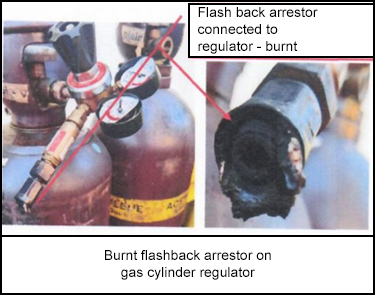
During a cutting task, a loud bang occurred when the torch was ignited, followed by a fire at the acetylene hose connection.
Emergency procedures were activated, and the vessel firefighting team extinguished the fire after cooling the gas cylinders and closing the cylinder valve.
Hot work was suspended, and the area was secured following the incident.
Seven weeks later, a similar event occurred when cutting equipment was ignited, resulting in a loud bang and a fire in the oxygen and propane rack.
The fire was controlled using extinguishers, the propane supply was isolated, and the bottle rack was cooled for two hours to ensure the area was safe.
-
Why did it happen?
The cutting torch was not fitted with the required flashback arrestors, and neither the checklist nor the risk assessment specified that flashback arrestors should be installed at both the torch and cylinder ends of the hoses.
Following the first incident, the contractor did not carry out an adequate investigation or implement effective corrective actions to prevent a recurrence.
The torch operators were trained and deemed competent; however, they did not identify that the flashback arrestors were missing from the torch assembly.

-
What did they learn?
The incidents highlighted the importance of fitting flashback arrestors at both ends of gas hoses and verifying their installation before hot work begins.
Permit to work (PTW) checks should confirm that all required control measures are in place and effective before work starts.
Lessons learned from hot work incidents should be applied across all permit-controlled hazardous activities.
Equipment inspections should verify that safety-critical devices are correctly installed and functioning before mobilisation.
Effective incident investigations, corrective actions, and regular refresher training are essential to prevent similar events from recurring.

-
Ask yourself or your crew
How can we ensure flashback arrestors are fitted on both ends of hoses before hot work?
How can we verify permit to work mitigation measures are in place for all hazardous activities?
How can we improve incident investigation and follow-up to prevent repeats?
How can we keep hot work training and risk familiarisation up to date?

Add to homescreen
Content name
Select existing category:
Content name
New collection
Edit collection

What happened?
During a cutting task, a loud bang occurred when the torch was ignited, followed by a fire at the acetylene hose connection.
Emergency procedures were activated, and the vessel firefighting team extinguished the fire after cooling the gas cylinders and closing the cylinder valve.
Hot work was suspended, and the area was secured following the incident.
Seven weeks later, a similar event occurred when cutting equipment was ignited, resulting in a loud bang and a fire in the oxygen and propane rack.
The fire was controlled using extinguishers, the propane supply was isolated, and the bottle rack was cooled for two hours to ensure the area was safe.

Why did it happen?
The cutting torch was not fitted with the required flashback arrestors, and neither the checklist nor the risk assessment specified that flashback arrestors should be installed at both the torch and cylinder ends of the hoses.
Following the first incident, the contractor did not carry out an adequate investigation or implement effective corrective actions to prevent a recurrence.
The torch operators were trained and deemed competent; however, they did not identify that the flashback arrestors were missing from the torch assembly.

What did they learn?
The incidents highlighted the importance of fitting flashback arrestors at both ends of gas hoses and verifying their installation before hot work begins.
Permit to work (PTW) checks should confirm that all required control measures are in place and effective before work starts.
Lessons learned from hot work incidents should be applied across all permit-controlled hazardous activities.
Equipment inspections should verify that safety-critical devices are correctly installed and functioning before mobilisation.
Effective incident investigations, corrective actions, and regular refresher training are essential to prevent similar events from recurring.

Ask yourself or your crew
How can we ensure flashback arrestors are fitted on both ends of hoses before hot work?
How can we verify permit to work mitigation measures are in place for all hazardous activities?
How can we improve incident investigation and follow-up to prevent repeats?
How can we keep hot work training and risk familiarisation up to date?
A flashback during hot work ignited fires in gas hose systems on two separate occasions, highlighting failures in flashback protection and equipment checks.