-
What happened?
The team was preparing to move a sample recovery tool up to the rooster box using a tool-handling assembly rail.
During positioning, an operator error caused the tool to make contact with a section of handrail.
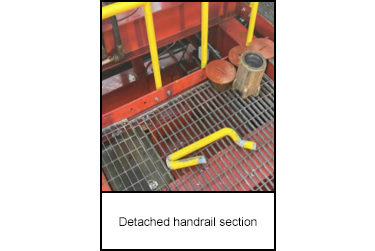
The impact caused the 3.55kg (7.8lbs) handrail section to detach.
The detached handrail section fell approximately 6 metres (19.7 feet) to the walkway below.
-
Why did it happen?
The operator of the tool handler did not fully contract the tool handler to its home position after the last use.
There was a design flaw in the positioning of the tool handler where the gap between two rails became tight, leading to most larger tools hitting the railing.

-
What did they learn?
The inadequate design and spacing around the tool handler resulted in restricted movement, leading to modifications being made across similar vessels.
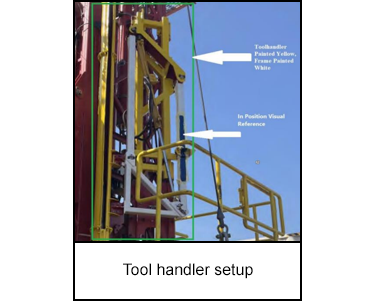
Poor ergonomics and limited visibility made it difficult to confirm the tool’s home position, as there were no secondary visual indicators.
The equipment was repainted to improve visibility, and a new lighting system was installed to help confirm correct tool positioning.
A management of change process was completed, along with updated risk assessments and training runs, before operations were allowed to resume.
-
Ask yourself or your crew
Are tools or equipment being used in their correct location or position before starting work?
Have hazards been cleared that may obstruct work?
Has a risk assessment been completed prior to work?
What improvements or changes should we make to the procedures, controls or barriers, or the way we work?

Add to homescreen
Content name
Select existing category:
Content name
New collection
Edit collection

What happened?
The team was preparing to move a sample recovery tool up to the rooster box using a tool-handling assembly rail.
During positioning, an operator error caused the tool to make contact with a section of handrail.
The impact caused the 3.55kg (7.8lbs) handrail section to detach.
The detached handrail section fell approximately 6 metres (19.7 feet) to the walkway below.

Why did it happen?
The operator of the tool handler did not fully contract the tool handler to its home position after the last use.
There was a design flaw in the positioning of the tool handler where the gap between two rails became tight, leading to most larger tools hitting the railing.

What did they learn?
The inadequate design and spacing around the tool handler resulted in restricted movement, leading to modifications being made across similar vessels.
Poor ergonomics and limited visibility made it difficult to confirm the tool’s home position, as there were no secondary visual indicators.
The equipment was repainted to improve visibility, and a new lighting system was installed to help confirm correct tool positioning.
A management of change process was completed, along with updated risk assessments and training runs, before operations were allowed to resume.

Ask yourself or your crew
Are tools or equipment being used in their correct location or position before starting work?
Have hazards been cleared that may obstruct work?
Has a risk assessment been completed prior to work?
What improvements or changes should we make to the procedures, controls or barriers, or the way we work?
A dropped handrail incident occurred when a tool struck a handrail during positioning, causing a section to detach and fall to a walkway below.