-
What happened?
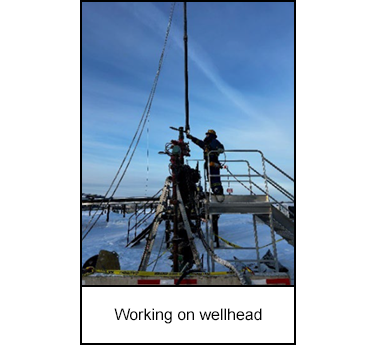
A wireline crew swabbed a sour well with a hydrogen sulphide (H2S) concentration of approximately 10 per cent. During the operation, the crew needed to remove the lubricator assembly to perform routine maintenance.
The crew closed both master valves on the wellhead, bled off pressure above the master valves and purged the system with nitrogen. Purge gas was introduced at the top of the lubricator assembly and from the wellhead wing valve to the well test separator and flare line.
Monitoring was conducted to verify the effectiveness of the purge. The lubricator assembly was disconnected from the wellhead by a worker wearing a supplied-air breathing apparatus (SABA). Following disconnection from the wellhead, the crew laid down the lubricator and performed maintenance, which took approximately one hour to complete.
The crew then commenced moving the lubricator back to the wellhead for reconnection. A wireline operator without SABA positioned the lubricator over the blowout preventer (BOP) when he noticed a strange taste and felt light-headed. He stepped back from the wellhead before losing consciousness and falling down the stairs on the wellhead platform. The injured worker quickly regained consciousness, was taken to the hospital for assessment, and released later that day. Upon investigation, wellhead master valves were confirmed to be functioning correctly.

-
Why did it happen?
This task presented several potential pathways for exposing the worker to dangerous H2S concentrations. Due to either an incomplete purge of the system or ineffective wellhead isolation, H2S began venting from the top of the wellhead while lubricator maintenance was performed. While work procedures recognised and controlled for the exposure hazard during lubricator disconnection, procedures for re-installing the lubricator assumed the wellhead remained isolated and purged, and therefore did not require respiratory protection for the worker or verification that the area around the wellhead opening was free of hydrogen sulphide gas.
-
What did they learn?
Controls deemed effective can fail or prove inadequate for a job, and measures must be taken to ensure the safety of workers in the event of a failure of primary controls. Procedures for these tasks have been updated to require worker protection with SABA or self-contained breathing apparatus (SCBA) whenever the lubricator is removed or re-installed on the wellhead.
-
Ask yourself or your crew
Have all exposure pathways been identified?
How do we know our purge and isolation measures have been effective? How do we know these measures will remain effective? What do we have in place in case these measures fail?
Are our current personal protective equipment (PPE) and monitoring measures sufficient?
What measures do we have in place to fail safely if things do not go according to plan?
Add to homescreen
Content name
Select existing category:
Content name
New collection
Edit collection

What happened?
A wireline crew swabbed a sour well with a hydrogen sulphide (H2S) concentration of approximately 10 per cent. During the operation, the crew needed to remove the lubricator assembly to perform routine maintenance.
The crew closed both master valves on the wellhead, bled off pressure above the master valves and purged the system with nitrogen. Purge gas was introduced at the top of the lubricator assembly and from the wellhead wing valve to the well test separator and flare line.
Monitoring was conducted to verify the effectiveness of the purge. The lubricator assembly was disconnected from the wellhead by a worker wearing a supplied-air breathing apparatus (SABA). Following disconnection from the wellhead, the crew laid down the lubricator and performed maintenance, which took approximately one hour to complete.
The crew then commenced moving the lubricator back to the wellhead for reconnection. A wireline operator without SABA positioned the lubricator over the blowout preventer (BOP) when he noticed a strange taste and felt light-headed. He stepped back from the wellhead before losing consciousness and falling down the stairs on the wellhead platform. The injured worker quickly regained consciousness, was taken to the hospital for assessment, and released later that day. Upon investigation, wellhead master valves were confirmed to be functioning correctly.

Why did it happen?
This task presented several potential pathways for exposing the worker to dangerous H2S concentrations. Due to either an incomplete purge of the system or ineffective wellhead isolation, H2S began venting from the top of the wellhead while lubricator maintenance was performed. While work procedures recognised and controlled for the exposure hazard during lubricator disconnection, procedures for re-installing the lubricator assumed the wellhead remained isolated and purged, and therefore did not require respiratory protection for the worker or verification that the area around the wellhead opening was free of hydrogen sulphide gas.

What did they learn?
Controls deemed effective can fail or prove inadequate for a job, and measures must be taken to ensure the safety of workers in the event of a failure of primary controls. Procedures for these tasks have been updated to require worker protection with SABA or self-contained breathing apparatus (SCBA) whenever the lubricator is removed or re-installed on the wellhead.

Ask yourself or your crew
Have all exposure pathways been identified?
How do we know our purge and isolation measures have been effective? How do we know these measures will remain effective? What do we have in place in case these measures fail?
Are our current personal protective equipment (PPE) and monitoring measures sufficient?
What measures do we have in place to fail safely if things do not go according to plan?
A worker was briefly knocked unconscious by unexpected H₂S release during lubricator reinstalling after an incomplete purge on a sour well.
Original material courtesy of Energy Safety Canada