-
What happened?
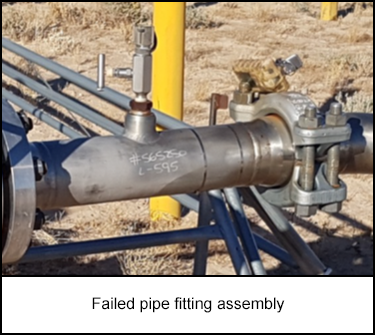
An operator observed a gas vapour cloud coming from a tie-in manifold.
The operator parked their vehicle well away from the leak source and then contacted their supervisor who shut down the upstream wells remotely.
The operator was then able to access a manual valve to fully isolate the field manifold and depressurise the remaining gas inventory.
-
Why did it happen?
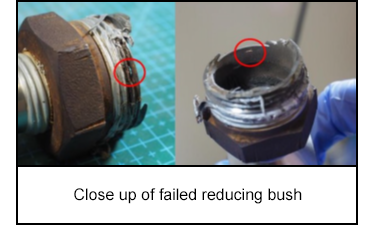
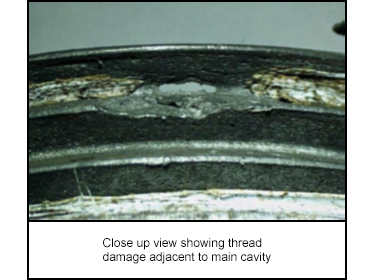
The direct cause of the incident was corrosion of a carbon steel reducing bush installed between duplex stainless steel (SS) and SS316 fittings during an upgrade project completed in 2019.
The key contributing factors include:
- Incompatible material was not detected by construction quality assurance (QA) processes, pre-startup safety review (PSSR) or during operational inspections.
- The original design feature (20mm (0.79in) thredolet) had no practical purpose yet was retained in the design.
- Management of change was not applied when a needle valve, bush and Vaetrix fitting was installed.
-
What did they learn?
Incompatible materials can lead to accelerated corrosion.
Ensure the field workforce and project teams are aware of the hazards associated with installation of incompatible materials and are able to detect non-conformances.
Construction-related changes and the triggers for management of change need to be understood by the workforce and project teams.
-
Ask yourself or your crew
Does your facility rely upon corrosion resistant alloys to manage inherent corrosion risks? Have you checked for any non-compliant materials and do people know what to look for?
Do you complete Front-end engineering reviews to ensure new facility design is fit for purpose?
Do your quality assurance processes asses for installation of non-compatible materials prior to start-up?
Add to homescreen
Content name
Select existing category:
Content name
New collection
Edit collection

What happened?
An operator observed a gas vapour cloud coming from a tie-in manifold.
The operator parked their vehicle well away from the leak source and then contacted their supervisor who shut down the upstream wells remotely.
The operator was then able to access a manual valve to fully isolate the field manifold and depressurise the remaining gas inventory.

Why did it happen?
The direct cause of the incident was corrosion of a carbon steel reducing bush installed between duplex stainless steel (SS) and SS316 fittings during an upgrade project completed in 2019.
The key contributing factors include:
- Incompatible material was not detected by construction quality assurance (QA) processes, pre-startup safety review (PSSR) or during operational inspections.
- The original design feature (20mm (0.79in) thredolet) had no practical purpose yet was retained in the design.
- Management of change was not applied when a needle valve, bush and Vaetrix fitting was installed.

What did they learn?
Incompatible materials can lead to accelerated corrosion.
Ensure the field workforce and project teams are aware of the hazards associated with installation of incompatible materials and are able to detect non-conformances.
Construction-related changes and the triggers for management of change need to be understood by the workforce and project teams.

Ask yourself or your crew
Does your facility rely upon corrosion resistant alloys to manage inherent corrosion risks? Have you checked for any non-compliant materials and do people know what to look for?
Do you complete Front-end engineering reviews to ensure new facility design is fit for purpose?
Do your quality assurance processes asses for installation of non-compatible materials prior to start-up?
An operator spotted a gas vapour cloud at a manifold. Wells were shut down remotely and the manifold was isolated and depressurised.
Original material courtesy of Safer Together (Australia)
To access the PDF and PowerPoint versions, please visit https://www.safertogether.com.au/learning-event-bulletins/operating-a-well-loss-of-containment-learning-event-bulletin