-
What happened?
During cable dressing work on a service lift inside a turbine tower, a contracted electrical technician sustained an electric shock from an exposed 230 V cable end.
The injured person was taken to a local hospital and underwent testing but was released without further treatment.
-
Why did it happen?
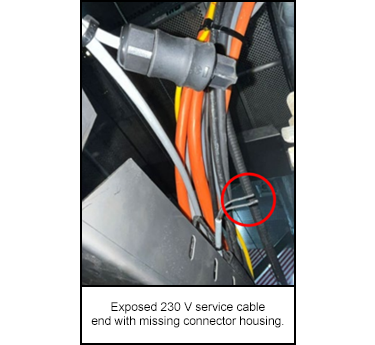
Initial investigation identified that the cable connector housing was missing from one of the 230 V service cables, leaving a live cable end exposed.
The issue had been identified during previous installation work but was not rectified. The relevant contractor did not inform others or isolate, de-energise or secure the system when the defect was discovered.
The contractor’s isolation and verification process did not ensure that defects involving exposed live conductors triggered de-energisation, corrective action or communication to the site operator.
The contractor’s risk assessments and method statements (RAMS), supervision and additional controls did not include sufficient hold points, checks or verification steps to ensure compliance with the contractor’s own energy isolation requirements and Lifesaving Rules during lift commissioning activities.

-
What did they learn?
Fully document the site-specific lockout/tagout (LOTO) policy and brief it to all electrical technicians.
Update procedures and risk assessments and method statements (RAMS) to reflect the findings of this incident. Further work should not process until the revised documentation is approved and communicated to all relevant personnel.
The contractor should carry out a competence review specific to isolation and defect escalation to confirm that all personnel working on service lift systems are trained in line with industry guidance.
An independent electrical specialist will visit the site and conduct a full review of safety procedures and working practices.

-
Ask yourself or your crew
Have you escalated any faults or issues found during maintenance work? Do you feel comfortable doing so?
Are you aware of any previous issues with the system you are working on?
Have all isolation and control procedures been followed before any electrical work?
Have you followed the relevant G+ Lifesaving Rule: “Always verify isolation and zero energy before work begins”?
Add to homescreen
Content name
Select existing category:
Content name
New collection
Edit collection

What happened?
During cable dressing work on a service lift inside a turbine tower, a contracted electrical technician sustained an electric shock from an exposed 230 V cable end.
The injured person was taken to a local hospital and underwent testing but was released without further treatment.

Why did it happen?
Initial investigation identified that the cable connector housing was missing from one of the 230 V service cables, leaving a live cable end exposed.
The issue had been identified during previous installation work but was not rectified. The relevant contractor did not inform others or isolate, de-energise or secure the system when the defect was discovered.
The contractor’s isolation and verification process did not ensure that defects involving exposed live conductors triggered de-energisation, corrective action or communication to the site operator.
The contractor’s risk assessments and method statements (RAMS), supervision and additional controls did not include sufficient hold points, checks or verification steps to ensure compliance with the contractor’s own energy isolation requirements and Lifesaving Rules during lift commissioning activities.

What did they learn?
Fully document the site-specific lockout/tagout (LOTO) policy and brief it to all electrical technicians.
Update procedures and risk assessments and method statements (RAMS) to reflect the findings of this incident. Further work should not process until the revised documentation is approved and communicated to all relevant personnel.
The contractor should carry out a competence review specific to isolation and defect escalation to confirm that all personnel working on service lift systems are trained in line with industry guidance.
An independent electrical specialist will visit the site and conduct a full review of safety procedures and working practices.

Ask yourself or your crew
Have you escalated any faults or issues found during maintenance work? Do you feel comfortable doing so?
Are you aware of any previous issues with the system you are working on?
Have all isolation and control procedures been followed before any electrical work?
Have you followed the relevant G+ Lifesaving Rule: “Always verify isolation and zero energy before work begins”?
An electrical technician received an electric shock from an exposed 230 V cable end while dressing cables inside a turbine tower.