-
What happened?
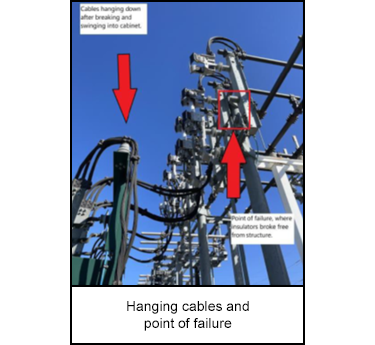
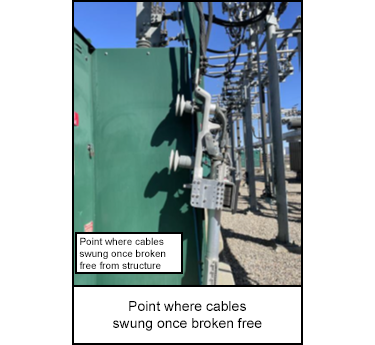
While completing annual preventative maintenance on a de-energised vertically mounted overhead isolation switch, an Electrician attempted to close the switch when one phase broke free and fell approximately 14ft (4.3m). The load side of the switch was connected by cabling, resulting in the broken phase swinging into a nearby switchgear cabinet.
-
Why did it happen?
The switching mechanism is fastened to the structure via two ceramic insulators which failed resulting in dropping the phase.
Manually operating the switch requires an Electrician to stand directly underneath the equipment.
Fortunately, the Electrician was alert and recognised the equipment failing and was able to quickly move out of the line of fire.
No injuries were sustained.
-
What did they learn?
Evaluate substations for switches mounted vertically in similar design.
For all vertical mounted switches, take extra caution when manually operating:
- Whenever possible operate switches de-energised.
- Have spotter monitor switches for any abnormalities while operating and discuss escape plan prior to operating.
- Ensure non-essential workers are clear of the drop/swing zone while operating.
- Evaluate location for applying grounds; applying grounds to the load side cable connections may result in additional weight applied to ceramic insulator connecting components.
- Before operating any switch, closely review insulators for any cracks or tracking.

-
Ask yourself or your crew
Could this happen to me or someone I know?
Do I have a similar or related story to share?
How can this be prevented from happening again?

Add to homescreen
Content name
Select existing category:
Content name
New collection
Edit collection

What happened?
While completing annual preventative maintenance on a de-energised vertically mounted overhead isolation switch, an Electrician attempted to close the switch when one phase broke free and fell approximately 14ft (4.3m). The load side of the switch was connected by cabling, resulting in the broken phase swinging into a nearby switchgear cabinet.

Why did it happen?
The switching mechanism is fastened to the structure via two ceramic insulators which failed resulting in dropping the phase.
Manually operating the switch requires an Electrician to stand directly underneath the equipment.
Fortunately, the Electrician was alert and recognised the equipment failing and was able to quickly move out of the line of fire.
No injuries were sustained.

What did they learn?
Evaluate substations for switches mounted vertically in similar design.
For all vertical mounted switches, take extra caution when manually operating:
- Whenever possible operate switches de-energised.
- Have spotter monitor switches for any abnormalities while operating and discuss escape plan prior to operating.
- Ensure non-essential workers are clear of the drop/swing zone while operating.
- Evaluate location for applying grounds; applying grounds to the load side cable connections may result in additional weight applied to ceramic insulator connecting components.
- Before operating any switch, closely review insulators for any cracks or tracking.

Ask yourself or your crew
Could this happen to me or someone I know?
Do I have a similar or related story to share?
How can this be prevented from happening again?
An electrician narrowly avoided injury when a failed insulator caused an overhead switch phase to drop and strike nearby equipment during maintenance.
Original material courtesy of Energy Safety Canada