-
What happened?
A team of contractors were in the process of replacing UPS (uninterruptable power supply) batteries on an offshore platform.
The injured person (IP) was tasked to replace the UPS battery rails and slide the battery back into the housing.
Whilst handling the battery back into its housing, the UPS battery slipped, causing the IP to grip it tightly.
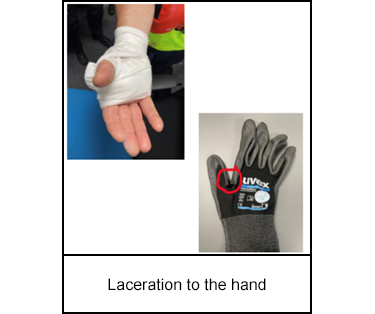
Upon gripping the UPS battery, the rail penetrated the IP’s glove, causing a laceration to their right hand between the thumb and index finger.
-
Why did it happen?
The technician was handling heavy equipment with relatively sharp edges.
The gloves being worn by the IP were not cut resistant to the correct standard.
The positioning of the IP’s hands meant that they were in direct contact with one of the sharp edges.
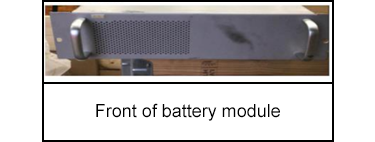
The positioning of the rail and the weight of the UPS battery (26kg/57lbs) made the battery awkward to handle leading to the slippage.
-
What did they learn?
Old rails with worn, sharp edges had been attached to new batteries.
The gloves in use were not rated for this level of cut. All gloves were subsequently replaced with higher resistance ones.
An update was made to the method statement, adding in the need to check rails for sharp edges and de burr them with a file before handling them.
Sharp hazard warning and training has been included in the job specification.

-
Ask yourself or your crew
Is the correct personal protective equipment (PPE) being used for the task?
Has a risk assessment of the task covered all reasonable outcomes, especially when dealing with older equipment?
Are technicians aware of the correct way to handle particularly heavy or bulky equipment?
What improvements or changes should we make to the procedures, controls, barriers, or the way we work?

Add to homescreen
Content name
Select existing category:
Content name
New collection
Edit collection

What happened?
A team of contractors were in the process of replacing UPS (uninterruptable power supply) batteries on an offshore platform.
The injured person (IP) was tasked to replace the UPS battery rails and slide the battery back into the housing.
Whilst handling the battery back into its housing, the UPS battery slipped, causing the IP to grip it tightly.
Upon gripping the UPS battery, the rail penetrated the IP’s glove, causing a laceration to their right hand between the thumb and index finger.

Why did it happen?
The technician was handling heavy equipment with relatively sharp edges.
The gloves being worn by the IP were not cut resistant to the correct standard.
The positioning of the IP’s hands meant that they were in direct contact with one of the sharp edges.
The positioning of the rail and the weight of the UPS battery (26kg/57lbs) made the battery awkward to handle leading to the slippage.

What did they learn?
Old rails with worn, sharp edges had been attached to new batteries.
The gloves in use were not rated for this level of cut. All gloves were subsequently replaced with higher resistance ones.
An update was made to the method statement, adding in the need to check rails for sharp edges and de burr them with a file before handling them.
Sharp hazard warning and training has been included in the job specification.

Ask yourself or your crew
Is the correct personal protective equipment (PPE) being used for the task?
Has a risk assessment of the task covered all reasonable outcomes, especially when dealing with older equipment?
Are technicians aware of the correct way to handle particularly heavy or bulky equipment?
What improvements or changes should we make to the procedures, controls, barriers, or the way we work?
A contractor replacing UPS batteries on an offshore platform suffered a hand laceration when a slipping battery caused a rail to pierce their glove.