-
What happened?
A contractor was tasked with checking some steel fixing bolts at a converter station.
After finishing tightening bolts on one plinth, they stepped down and rolled their ankle.
Although no initial pain was felt, as the day went on the contractor said that their ankle had become stiff and painful.
A trip to a local A&E department confirmed a fracture.

-
Why did it happen?
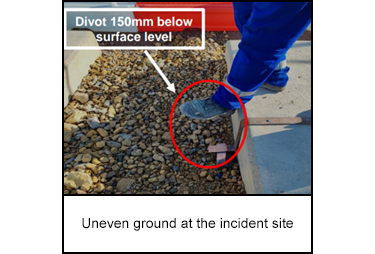
The injured person (IP) had a lack of awareness of changes in ground level between plinths and the unanticipated change in ground height resulted in the IP placing excessive pressure on his ankle while at an unnatural angle leading to a fracture.
The area of uneven ground caused by the removal of ground around the installed earthing strip had not been back filled on completion of installation.
The hazard caused by removal of ground had not been highlighted or barriered off. No clear visual warning or demarcation had been installed.
-
What did they learn?
A toolbox talk has been delivered to raise awareness of the incident and inform operatives that they should make good the ground on completion of earthing works.
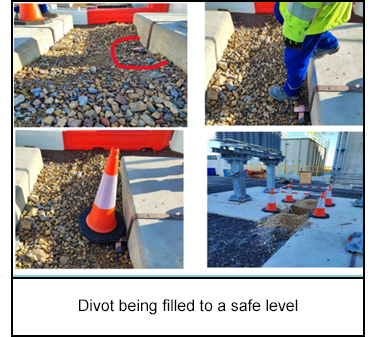
Work instructions have been modified to document the requirement for all divots to be back filled on completion of earthing works and for temporary barriers to be installed prior to back filling.
The AC yard has now been graded with chippings to finished level, so all divots are removed.
A review of design is to be undertaken with a view of eliminating or reducing the need to access the plinths.
-
Ask yourself or your crew
What signage is in place for uneven terrain and relevant hazards around the work site?
Have the site and job risk assessments been carried out correctly?
Is the ground around your work area level and suitable to carry out your tasks?

Add to homescreen
Content name
Select existing category:
Content name
New collection
Edit collection

What happened?
A contractor was tasked with checking some steel fixing bolts at a converter station.
After finishing tightening bolts on one plinth, they stepped down and rolled their ankle.
Although no initial pain was felt, as the day went on the contractor said that their ankle had become stiff and painful.
A trip to a local A&E department confirmed a fracture.

Why did it happen?
The injured person (IP) had a lack of awareness of changes in ground level between plinths and the unanticipated change in ground height resulted in the IP placing excessive pressure on his ankle while at an unnatural angle leading to a fracture.
The area of uneven ground caused by the removal of ground around the installed earthing strip had not been back filled on completion of installation.
The hazard caused by removal of ground had not been highlighted or barriered off. No clear visual warning or demarcation had been installed.

What did they learn?
A toolbox talk has been delivered to raise awareness of the incident and inform operatives that they should make good the ground on completion of earthing works.
Work instructions have been modified to document the requirement for all divots to be back filled on completion of earthing works and for temporary barriers to be installed prior to back filling.
The AC yard has now been graded with chippings to finished level, so all divots are removed.
A review of design is to be undertaken with a view of eliminating or reducing the need to access the plinths.

Ask yourself or your crew
What signage is in place for uneven terrain and relevant hazards around the work site?
Have the site and job risk assessments been carried out correctly?
Is the ground around your work area level and suitable to carry out your tasks?
A contractor rolled their ankle after stepping down from a plinth, later developing pain and stiffness that revealed a fracture.