-
What happened?
A crew member on board a guard vessel had been feeling unwell for approximately 10 days.
When returning home after rotation, the technician went to A&E where bloods were taken.
The crew member was then diagnosed with potentially long-term exposure to carbon monoxide (CO).
CO was found to be leaking on board the vessel he had been stationed.
The vessel was stood down while an investigation took place.

-
Why did it happen?
Over the course of the technician’s rotation, they were in contact with the CO much more than other members of the crew on board.
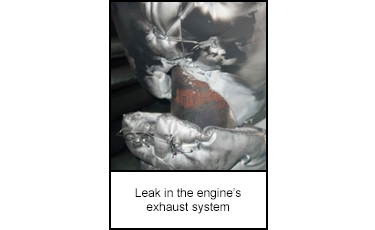
CO was found to be leaking from various points in the engines exhaust system because of a failed gasket in the exhaust system.

-
What did they learn?
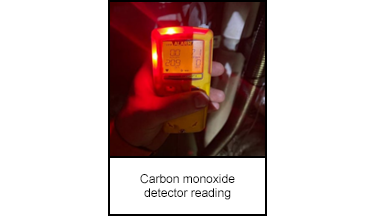
Investigations found that CO levels in the engine room were initially around four times the normal level because of the leak.
They also found that the gas passage went up behind designated crew sleeping areas, meaning that CO in sleeping areas was three times normal levels.
Over a fifteen-minute measuring period, the CO level reached over ten times normal levels in the engine room.
The CO detector on board was found to be working incorrectly.
Seafaring vessels are not required to carry CO monitors.
-
Ask yourself or your crew
Are safety checks regularly carried out by trained technicians on a vessel?
Are monitoring devices regularly tested to make sure they are still in good working order?
Are there properly placed carbon monoxide detectors around the vessel? Where are they located?
Add to homescreen
Content name
Select existing category:
Content name
New collection
Edit collection

What happened?
A crew member on board a guard vessel had been feeling unwell for approximately 10 days.
When returning home after rotation, the technician went to A&E where bloods were taken.
The crew member was then diagnosed with potentially long-term exposure to carbon monoxide (CO).
CO was found to be leaking on board the vessel he had been stationed.
The vessel was stood down while an investigation took place.

Why did it happen?
Over the course of the technician’s rotation, they were in contact with the CO much more than other members of the crew on board.
CO was found to be leaking from various points in the engines exhaust system because of a failed gasket in the exhaust system.

What did they learn?
Investigations found that CO levels in the engine room were initially around four times the normal level because of the leak.
They also found that the gas passage went up behind designated crew sleeping areas, meaning that CO in sleeping areas was three times normal levels.
Over a fifteen-minute measuring period, the CO level reached over ten times normal levels in the engine room.
The CO detector on board was found to be working incorrectly.
Seafaring vessels are not required to carry CO monitors.

Ask yourself or your crew
Are safety checks regularly carried out by trained technicians on a vessel?
Are monitoring devices regularly tested to make sure they are still in good working order?
Are there properly placed carbon monoxide detectors around the vessel? Where are they located?
A crew member fell ill after long term carbon monoxide exposure on a guard vessel. A leak was found and the vessel was stood down for investigation.