-
What happened?
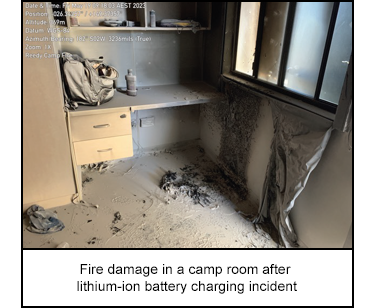
A lithium-ion battery used to power smoking (vape) equipment was being charged in an unattended camp room.
Heat generated from the battery being charged resulted in a fire.
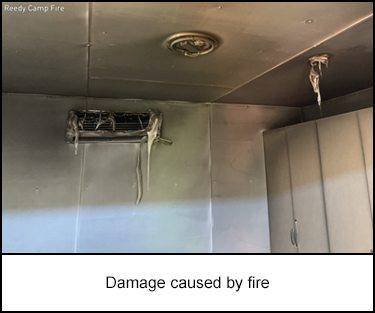
The fire quickly engulfed the plastic chair the charger was placed on and laddered up to plastic blackout curtains and adjacent wall cladding.
A camp resident reported smoke. First responders found the room alight and smoke alarms had been activated.
The fire was controlled using two 4.5 kg (9.9 lb) dry chemical extinguishers.
Actual consequence: no harm to persons. Potential consequence: this could have caused a fatality.
-
Why did it happen?
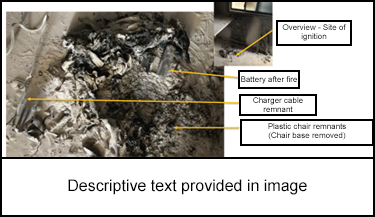
The lithium-ion battery charger malfunctioned.
It was approximately 9 months old and had operated without fault prior to the event.
When lithium-ion batteries are damaged or failing, they can cause the charger to remain engaged and generate substantial amounts of heat.
Placing the battery and charger on a plastic chair provided fuel and intensified the fire.
-
What did they learn?
Camp induction was reviewed to promote awareness of the hazard associated with charging lithium-ion batteries.
Camp rooms should be modified to prevent them being energised when unattended.
-
Ask yourself or your crew
Do you use equipment that is powered by lithium-ion batteries?
Do you know there is a risk of fire when charging lithium-ion batteries?
Do you know how to manage this risk, including what to do in the event of a fire?
How can something like this happen here (e.g. on our site or in accommodation)?
What safety measures (i.e. procedures, controls/barriers) do we have in place to mitigate the risk?
Add to homescreen
Content name
Select existing category:
Content name
New collection
Edit collection

What happened?
A lithium-ion battery used to power smoking (vape) equipment was being charged in an unattended camp room.
Heat generated from the battery being charged resulted in a fire.
The fire quickly engulfed the plastic chair the charger was placed on and laddered up to plastic blackout curtains and adjacent wall cladding.
A camp resident reported smoke. First responders found the room alight and smoke alarms had been activated.
The fire was controlled using two 4.5 kg (9.9 lb) dry chemical extinguishers.
Actual consequence: no harm to persons. Potential consequence: this could have caused a fatality.

Why did it happen?
The lithium-ion battery charger malfunctioned.
It was approximately 9 months old and had operated without fault prior to the event.
When lithium-ion batteries are damaged or failing, they can cause the charger to remain engaged and generate substantial amounts of heat.
Placing the battery and charger on a plastic chair provided fuel and intensified the fire.

What did they learn?
Camp induction was reviewed to promote awareness of the hazard associated with charging lithium-ion batteries.
Camp rooms should be modified to prevent them being energised when unattended.

Ask yourself or your crew
Do you use equipment that is powered by lithium-ion batteries?
Do you know there is a risk of fire when charging lithium-ion batteries?
Do you know how to manage this risk, including what to do in the event of a fire?
How can something like this happen here (e.g. on our site or in accommodation)?
What safety measures (i.e. procedures, controls/barriers) do we have in place to mitigate the risk?
A lithium-ion battery charger malfunctioned in an unattended camp room, causing a fire that could have resulted in a fatality.
Original material courtesy of Safer Together (Australia)
To access the PDF and PowerPoint versions, please visit https://www.safertogether.com.au/learning-event-bulletins/working-with-electrical-equipment-fire-leb-toolbox
NFPA – Lithium-ion battery safety mini-portal: https://www.nfpa.org/education-and-research/energy-transition/lithium-Ion-batteries