-
What happened?
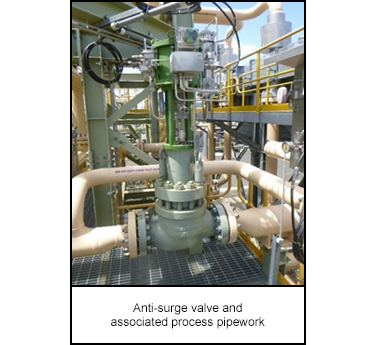
During operator rounds, a gas leak was identified from the gland packing of an anti-surge valve (ASV).
The leak was audible and was heard by the operator.
The operator’s personal gas detector reported a reading of 53% at 150 mm (5.9 in).
-
Why did it happen?
The stuffing box was corroded to the bonnet.
The corrosion stopped the packing from receiving tension and created the leak path.
The stuffing box had not been greased externally when installed, and additional silicone grease had not been used periodically to fill gaps and prevent water ingress.
The valve was situated on the top platform at a facility that was usually unmanned, which reduced the likelihood of an operator detecting a leak.
A periodic maintenance programme was not in place for anti-surge valves to prevent water ingress into the valve body.
-
What did they learn?
Carry out periodic maintenance of anti-surge valves to check for water ingress into the valve body.

-
Ask yourself or your crew
Does your site have anti-surge valves?
How do you check anti-surge valves for leaks?
What should you do if you detect a leak?
Are anti-surge valves subject to periodic maintenance to check for water ingress into the valve body?
How do you know the controls for preventing and detecting anti-surge valve leaks are working?

Add to homescreen
Content name
Select existing category:
Content name
New collection
Edit collection

What happened?
During operator rounds, a gas leak was identified from the gland packing of an anti-surge valve (ASV).
The leak was audible and was heard by the operator.
The operator’s personal gas detector reported a reading of 53% at 150 mm (5.9 in).

Why did it happen?
The stuffing box was corroded to the bonnet.
The corrosion stopped the packing from receiving tension and created the leak path.
The stuffing box had not been greased externally when installed, and additional silicone grease had not been used periodically to fill gaps and prevent water ingress.
The valve was situated on the top platform at a facility that was usually unmanned, which reduced the likelihood of an operator detecting a leak.
A periodic maintenance programme was not in place for anti-surge valves to prevent water ingress into the valve body.

What did they learn?
Carry out periodic maintenance of anti-surge valves to check for water ingress into the valve body.

Ask yourself or your crew
Does your site have anti-surge valves?
How do you check anti-surge valves for leaks?
What should you do if you detect a leak?
Are anti-surge valves subject to periodic maintenance to check for water ingress into the valve body?
How do you know the controls for preventing and detecting anti-surge valve leaks are working?
An anti-surge valve leaked flammable gas after corrosion prevented the gland packing from being tensioned.
Original material courtesy of Safer Together (Australia)
To access the PDF and PowerPoint versions, please visit https://www.safertogether.com.au/learning-event-bulletins/operating-process-equipment-loss-of-containment-sep-2024
Safer Together - Maintain It video (Process Safety Awareness): https://www.safertogether.com.au/resources/products-and-programs/maintain-it
Safer Together – We all have a part to play (Process Safety Awareness): https://www.safertogether.com.au/resources/products-and-programs/process-safety-we-all-have-a-part-to-play
Safer Together – Contain It (Major Accident Event Awareness Training): https://www.safertogether.com.au/resources/products-and-programs/contain-it-wa-nt